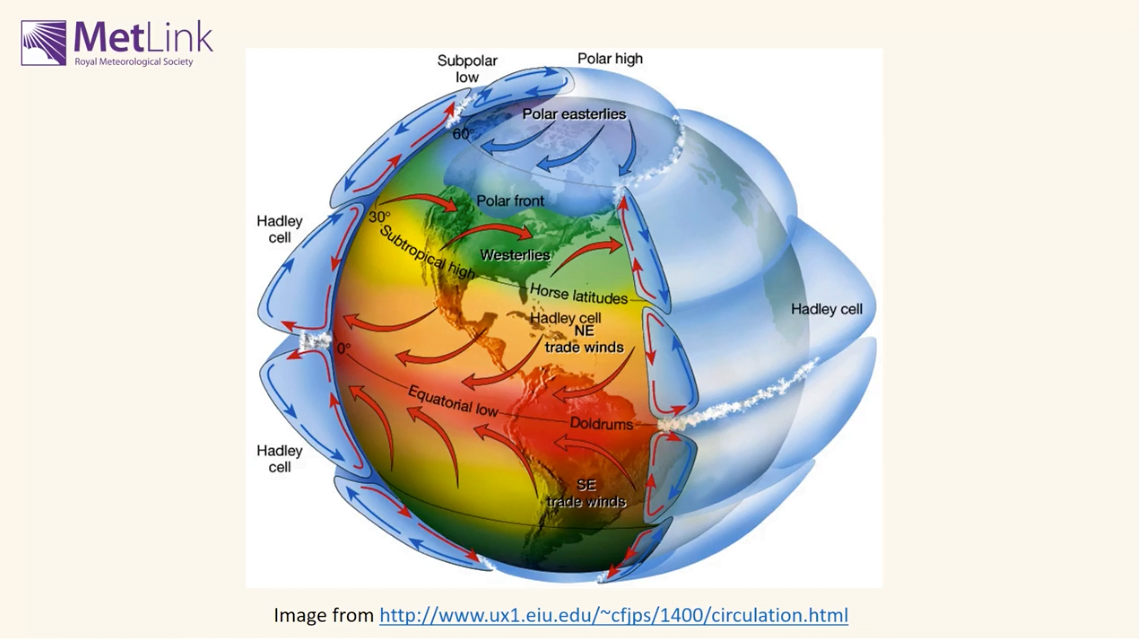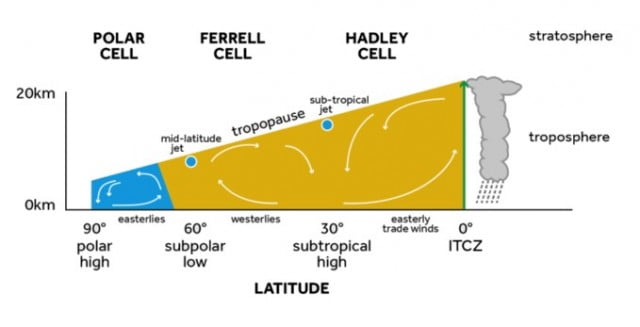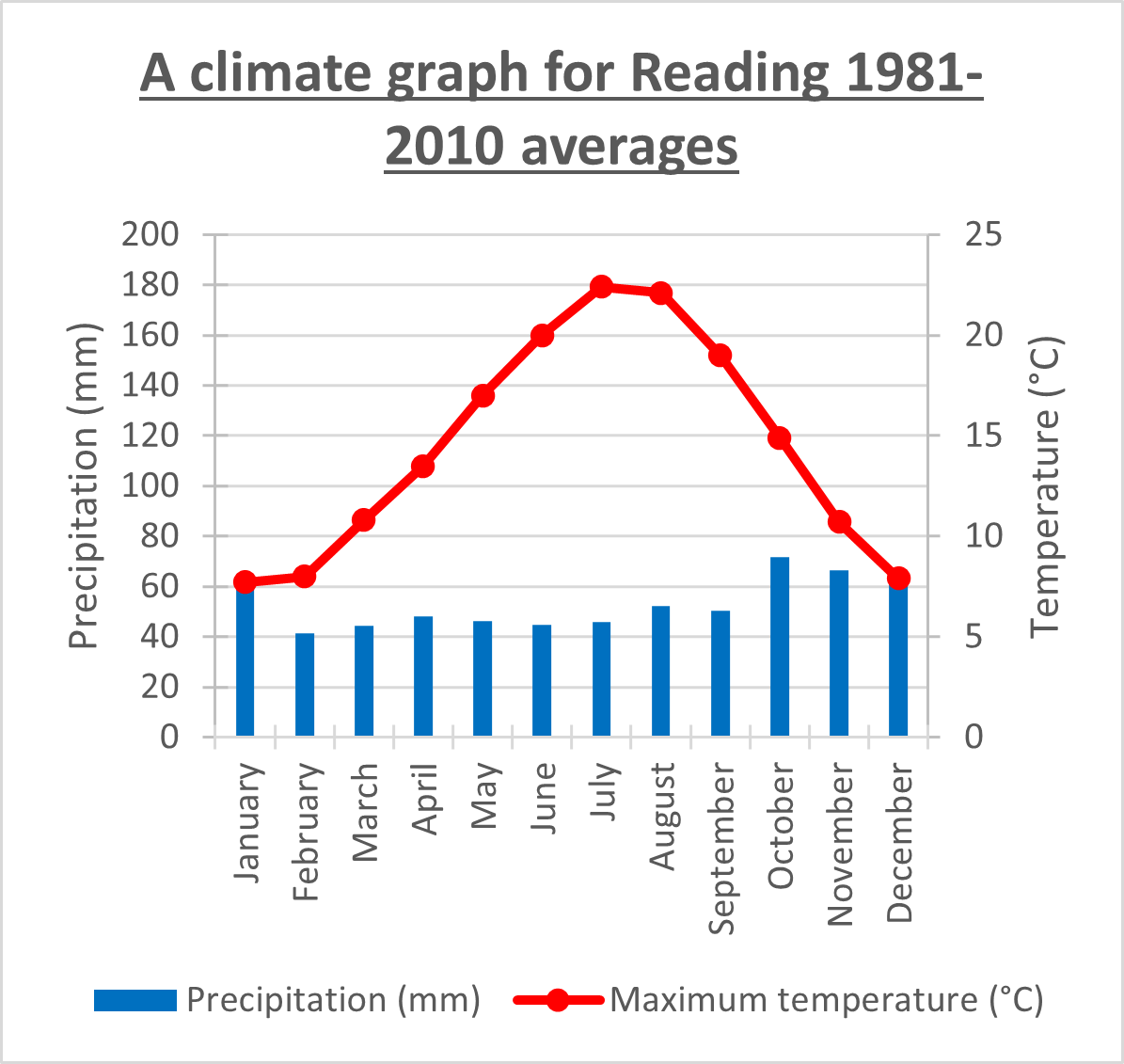
Global Atmospheric Circulation

Use this Global Atmospheric Circulation practice exercise.

Changes to the Global Atmospheric Circulation as the climate changes.

Other Useful Links

OCR Geography B GCSE

Resources for OCR 2016 Geography B

We are delighted to have worked together with the OCR to develop resources to support this specification – click here to access the resources with links embedded into the scheme of work here.

Other Recommended Resources to Support the Teaching of Weather and Climate within this Specification

1.1
How can weather be hazardous?

a) Why do we have weather extremes?

  • Outline of the global circulation system including the effects of high and low pressure belts in creating climatic zones.
  • How the global circulation of the atmosphere causes extremes in weather conditions in different parts of the world.
  • The extremes in weather conditions associated with wind, temperature and precipitation in contrasting countries.
  • The distribution and frequency of tropical storms and drought, and whether these have changed over time.
  • Outline the causes of the extreme weather conditions associated with tropical storms.
  • Outline the causes of the extreme weather conditions of El Niño/La Niña leading to drought.

a) When does extreme weather become a hazard?

  • Case studies of two contrasting natural weather hazard events arising from extreme weather conditions. The case studies must include a natural weather hazard from each bullet point below:

    There must be one UK based and one non-UK based natural weather hazard event

  • For each chosen hazard event, study the place specific causes (including the extreme weather conditions which led to the event), consequences of and responses to the hazard.

2.1
What evidence is there to suggest climate change is a natural process?

a) What evidence is there for climate change?

b) Is climate change a natural process?

  • Outline the causes of natural climate change including the theories of sun spots, volcanic eruptions and Milankovitch cycles.
  • Investigate the natural greenhouse effect and the impacts that humans have on the atmosphere, including the enhanced greenhouse effect.

c) Why is climate change a global issue?

  • Explore a range of social, economic and environmental impacts of climate change worldwide such as those resulting from sea level rise and extreme weather events. The impacts studied should relate to the 21st century.
  • Explore a range of social, economic and environmental impacts of climate change within the UK such as the impact on weather patterns, seasonal changes and changes in industry. The impacts studied should relate to the 21st century.

4.2
Why should tropical rainforests matter to us?

a) What biodiversity exists in tropical rainforests?

  • The distinctive characteristics of a tropical rainforest ecosystem, including the climate

4.3
Is there more to polar environments than ice?

a) What is it like in Antarctica and the Arctic?

  • Outline the distinctive characteristics of Antarctica and the Arctic, including climate

7.1
How is the UK changing in the 21st century?

a) What does the UK look like in the 21st century?

  • Overview of human and physical geographical characteristics of the UK, including population density, land use, rainfall and relief, and significant issues associated with these characteristics, including water stress and housing shortages.

8.1
Will we run out of natural resources?

a) How has increasing demand for resources affected our planet?

  • Outline the factors leading to demand outstripping supply of food, energy and water.

8.2
Can we feed nine billion people by 2050?

a) What does it mean to be food secure?

  • Understand the term ‘food security’ and the human and physical factors which influence this.

Climate Zones

Climate zones.

Some introductory ideas on Climate zones

Teaching Resources

Lesson 3 – Pritchard.pdf

Data and Image Sources

http://www.viewsoftheworld.net/wp-content/uploads/2014/12/AnnualPrecipitationAnimation.gif

Food Security

ipcc-updates-geography-teachers/#9

Teaching Resources

Data and Image Sources

Water Security

ipcc-updates-for-a-level-geography/security-of-water-supplies/

Teaching Resources

Data and Image Sources

Extreme Weather

Weather records will always be broken!

Further Information

In Depth – Extreme Weather (Met Office)

Teaching Resources

What do we mean by Extreme Weather? Data analysis.

Community experience of extreme weather Fieldwork/ investigation

https://www.rgs.org/schools/teaching-resources/key-stage-five/extreme-weather/

Work scheme on extreme weather including tropical storms

Data and Image Sources

UK Flash Flood Events

An introduction to flooding.

Data and Image Sources

National River Flow Archive http://nrfa.ceh.ac.uk/

Current UK river levels http://www.gaugemap.co.uk/

Tropical Storms

Teaching Resources
Tropical Cyclones Scheme of Work.

Work scheme on extreme weather including tropical storms.

lang_gis_hurricane_task

https://www.metlink.org/teachers/teacher-development/extreme-weather-2/

Data and Image Sources

Drought

https://www.metlink.org/other-weather/weather-hazards/drought/

Teaching Resources

Data and Image Sources

Heat Wave

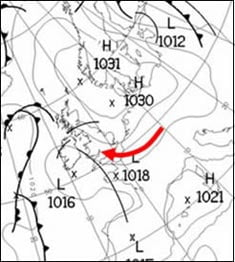
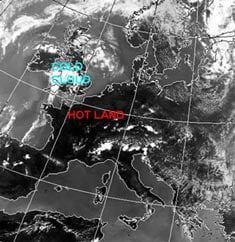
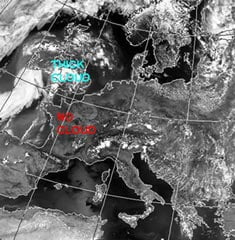
A case study of the 2003 heat wave.

A case study of the 2013 heat wave.

Teaching Resources

Data and Image Sources

Past Climate Change

Teaching Resources

Past Climate Change teaching resources

Data and Image Sources

Tempest database

Climate Change

Considerably more information can be found at our Climate Change Updates for Geography Teachers pages and in our general past climate change resources/ section.

Teaching Resources

Climate

Climate Change Schools Project

Data and Image Sources

UK climate projections and associated teaching resources

Further KS4 resources.

Link to OCR website for the full specification.

OCR GCSE Geography

We are delighted to have worked together with the OCR to develop the following resources to support this specification:

Extreme Weather Activities

A) Classroom Activities

Extreme weather – worksheet for classroom activity

Extreme weather – Excel data sheet

Extreme weather – Answer sheet for teachers

B) Excel Exercises

1) Activities to develop basic Excel skills: Excel basics.

2) Graphs in Excel:

a) Exploring Extreme Weather – Exploring extreme weather graphs in Excel – student worksheet with Exploring extreme weather graphs in Excel – Excel sheet and Exploring extreme weather graphs in Excel – solutions for teachers;

b) Task 1 with Task 1 – Answers for teachers ;

c) Task 2 with Task 2 – Answers for teachers;

d) Guidance on choosing the right graph in Excel Choosing the right graph.

3) Climate graphs in Excel:

Exploring extreme weather – making a climate graph student worksheet with Exploring extreme weather – making a climate graph – Excel sheet, Exploring extreme weather – making a climate graph – Excel solutions for teachers and Exploring extreme weather – making a climate graph – solution summary sheet.

4) Measures of data dispersion:

Exploring extreme weather – measures of dispersion – student worksheet with Exploring extreme weather – measures of dispersion – background information and Exploring extreme weather – measures of dispersion – Excel spreadsheet.

C) Homework Activity

Extreme weather – homework activity – student worksheet

Extreme weather – homework activity – Resource sheet

Extreme weather – homework activity – Solutions for teachers

2003 Heatwave

Background information: Heatwave case study

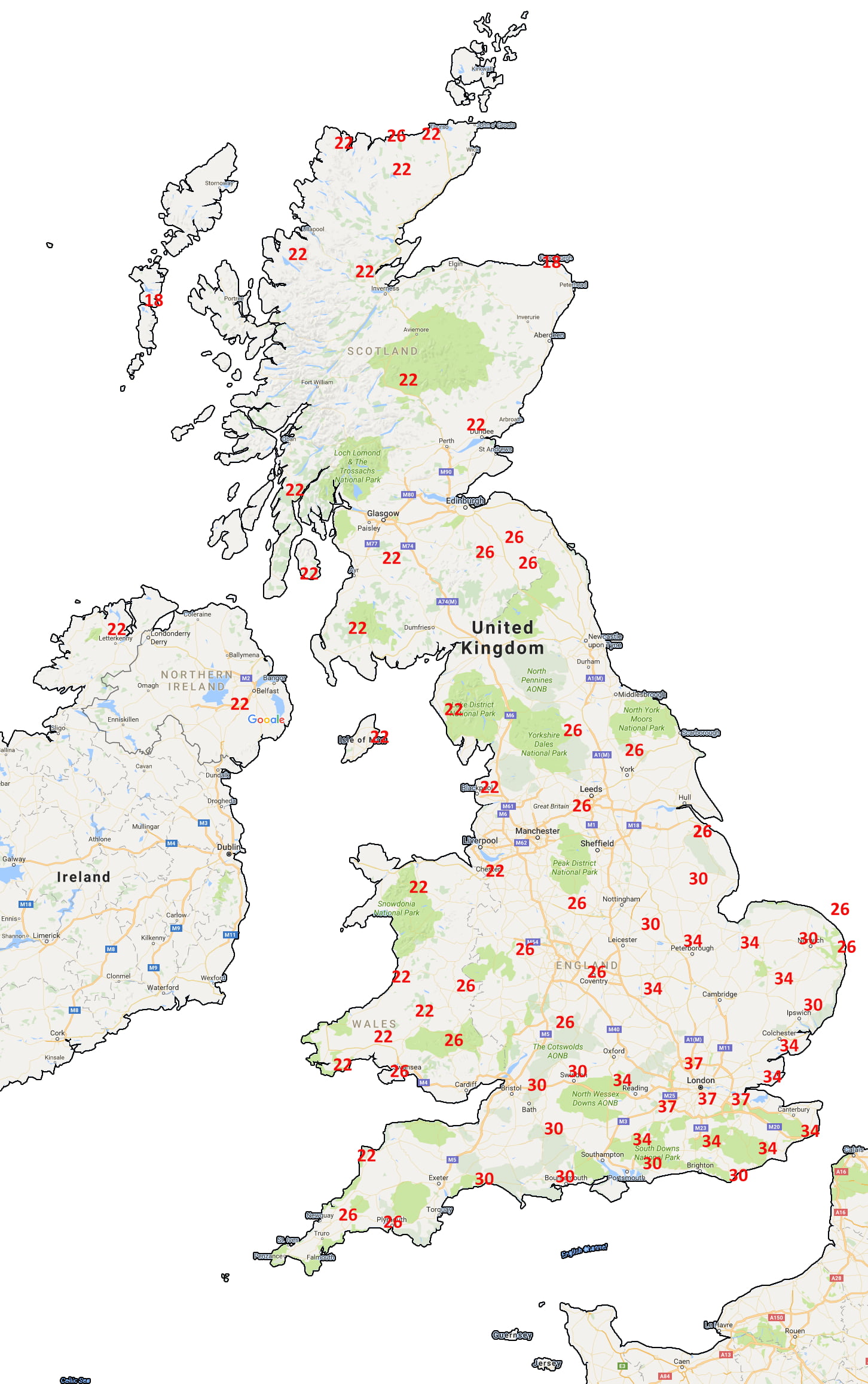
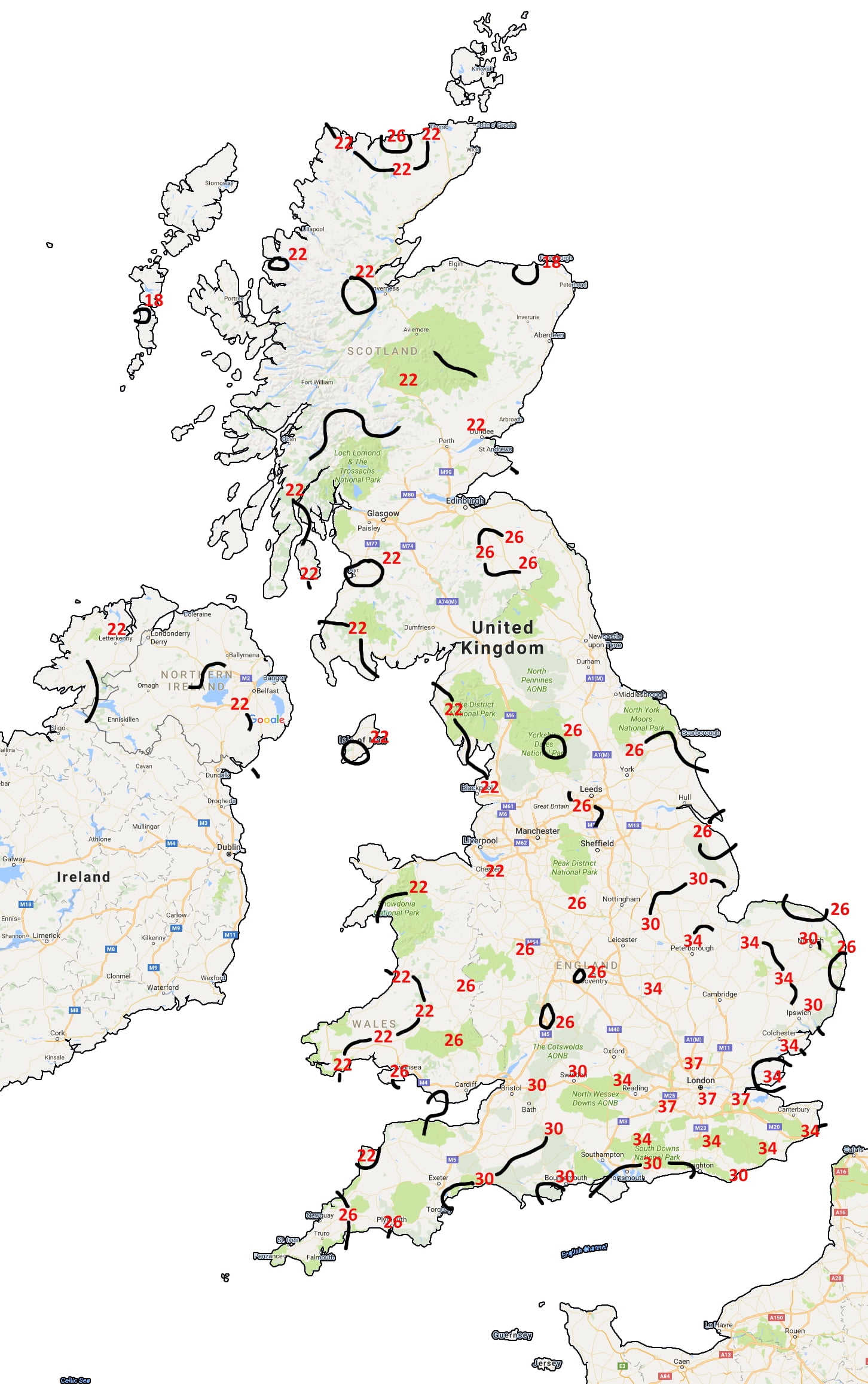
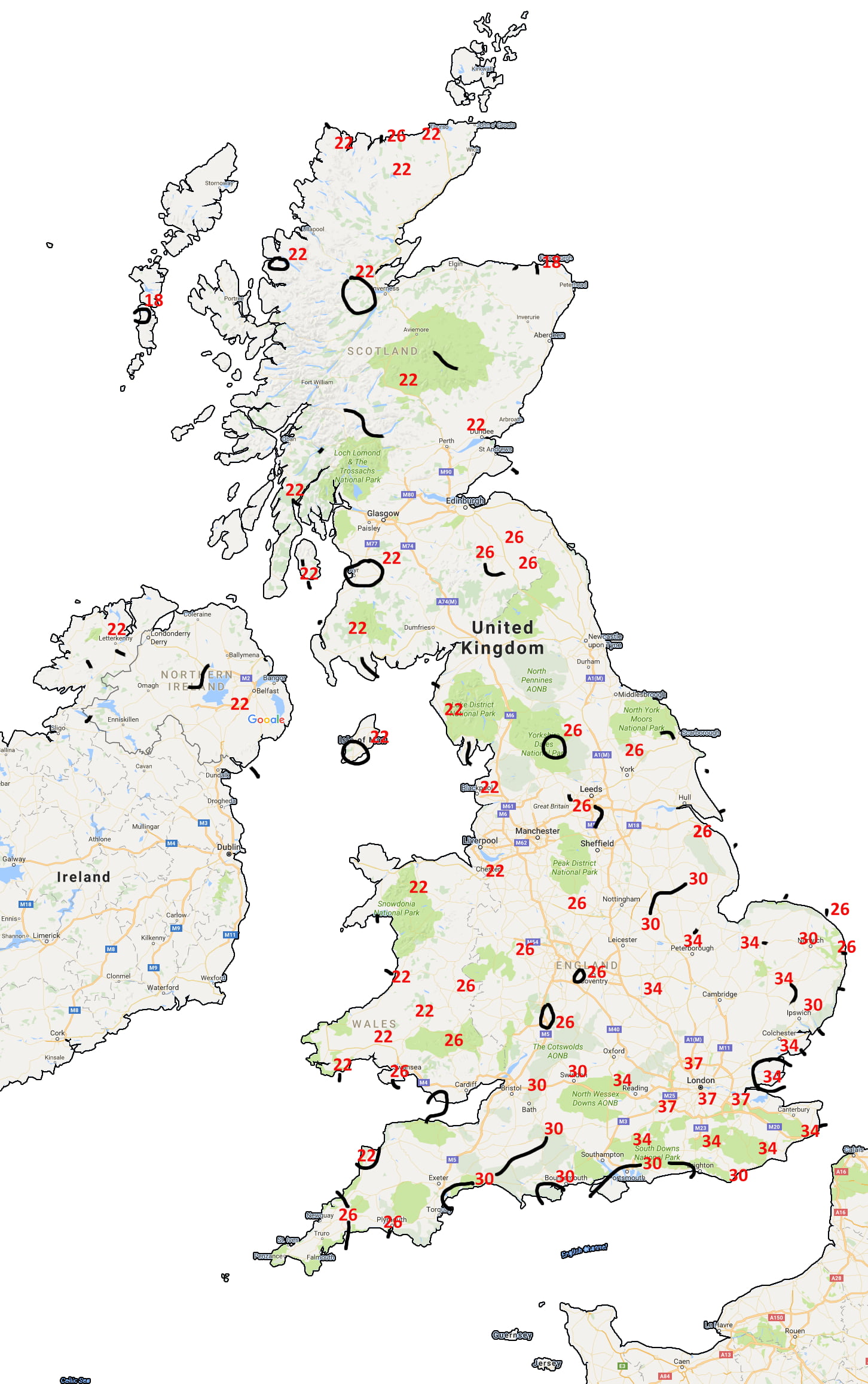
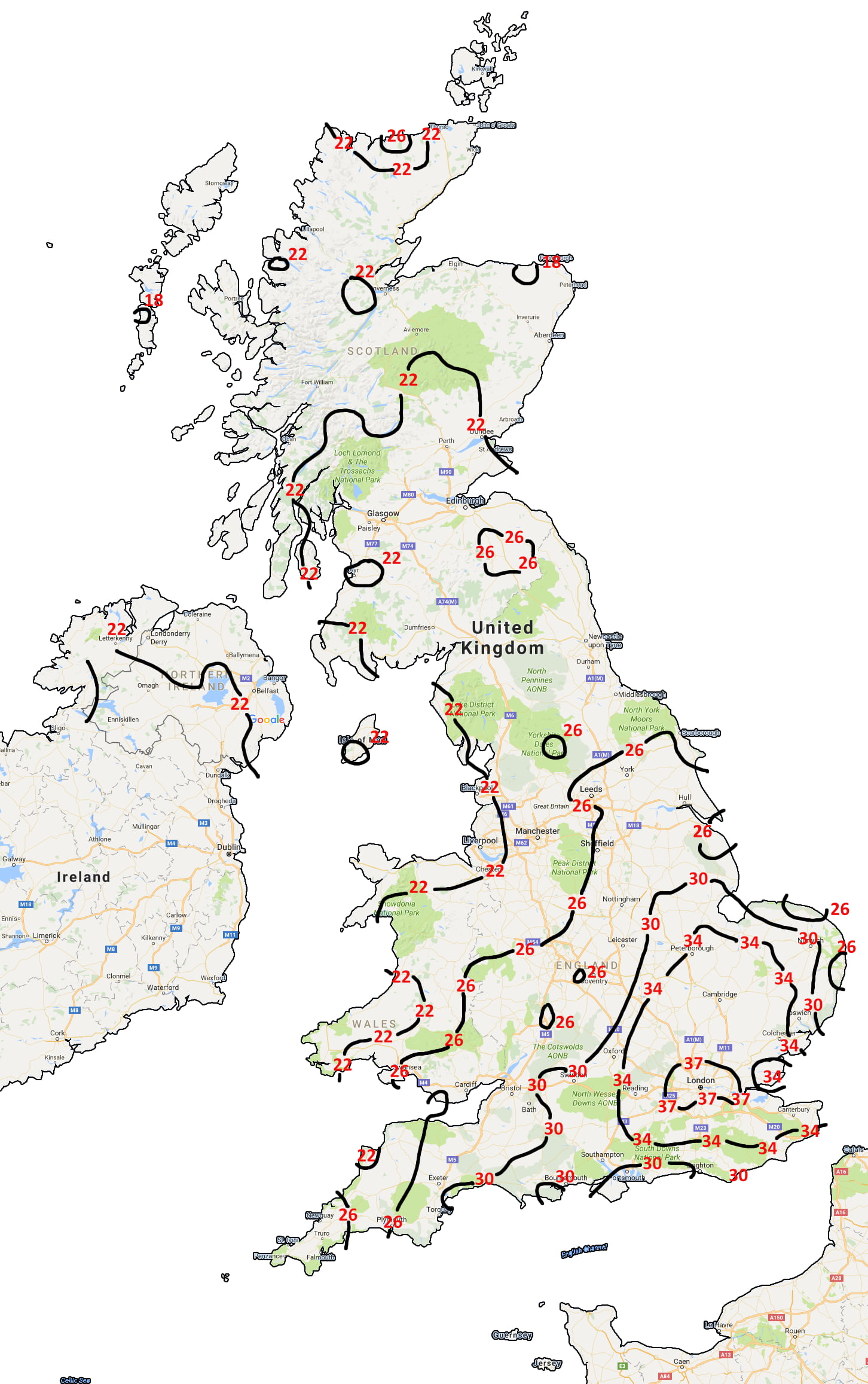
Isoline mapping Exercise

Isotherm – Notes for Teachers

Isotherm exercise – base map
Isotherm exercise – basic
Isotherm exercise – moderate
Isotherm exercise – challenging
Isotherm exercise – completed

St Jude’s Storm

Background information: St Jude’s storm case study.

Other recommended resources for OCR GCSE Geography A and OCR GCSE Geography B

OCR 2016 Geography A GCSE

Recommended Resources to Support the Teaching of Weather and Climate within this Specification

We are delighted to have worked together with the OCR to develop resources to support this specification – click here to access the resources with links embedded into the scheme of work here.

An introduction to microclimates.

An introduction to urban heat islands.

Microclimate fieldwork ideas.

Weather and Climate:a Teachers’ Guide Urban Climates

Weather and Climate: a Teachers’ Guide UK Climate 

An introduction by the Met Office.

Air Masses – there are many more air mass resources on the key stage 4 page.

A case study of arctic maritime air.

A case study worksheet of orographic rain can be found on the key stage 4 page.

A Met Office YouTube video on Wind Direction and weather.

Global Atmospheric Circulation YouTube video

Weather and Climate: a Teachers’ Guide  Atmospheric and Oceanic Circulation 

Some introductory ideas on climate zones.

Coriolis movie.

We also recommend:

The nullschool animation of current surface winds.

Weather and Climate: a Teachers’ Guide: Tropical Cyclones

Complete KS3 scheme of work on tropical cyclones, which could be used for revision or background information.

Work scheme on extreme weather including tropical storms (aimed at A level but could be adapted). 

Further KS4 resources. Link to OCR website for the full specification.

Key Stage 4 Geography Resources

Resources for 14-16 Year Old Students

Air Masses

Air masses and fronts – introductory text

Air Masses – an introduction to the major air masses affecting the UK

Case studies of UK air masses (November 2010, November 2011 and the end of September 2010) with answers for teachers and a case study of arctic maritime air (Jan/ Feb 2015) can be found on our case studies page.

Air Masses – worksheet and the Met Office’s air mass video .

AWS data to study air masses and depressions (adapted from LGfL)

Past Climate Change

Resources to teach the climate of the last 2.6 million years.

Climate negotiations resource:

climate negotiations trailer

https://www.youtube.com/watch?v=Cn-ZqGJxpk4&amp

Rainfall

A case study of orographic rainfall in Scotland with images for students Image 1, Image 2Image 3Image 4Image 5.

Weather Systems and Synoptic Charts

Mid-latitude weather systems

An introduction to weather systems

Anticyclones, depressions and fronts

Understanding weather charts – excercises

Weather systems plenary, revision or homework exercise – an investigation into why the forecast showed the temperature rising at night.

What is the weather? Work out what the weather is like at several UK locations based on some simplified weather maps.

Isotherm and Isobar drawing exercise based on a depression: student worksheet. A simpler version of the T/ isotherm map can be found here or the full version including solutions may be found on the A level page.

Using WOW data to investigate a depression passing across the UK with worksheets for students

Use WOW data to track a cold front across the UK and work out its speed.

Weather Maps – basic information on synoptic charts, with Isotherm map excercise and Synoptic chart excercise.

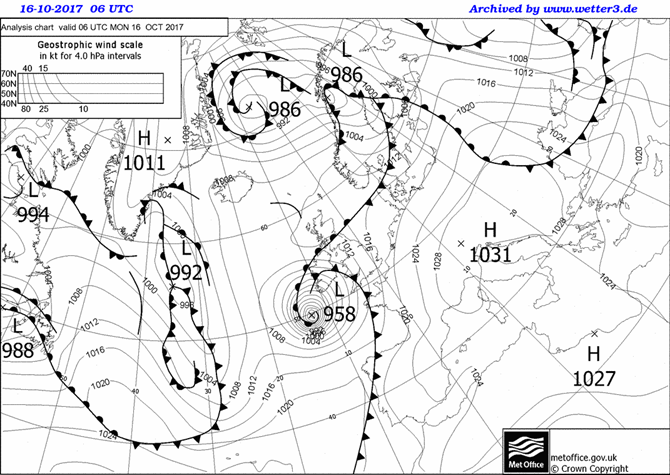
We’ve pulled together some resources about ex-hurricane Ophelia, bringing together information about tropical cyclones, depressions, anticyclones and air masses to explore the extremely unusual weather we experienced in October 2017  Ophelia.pptx.

Shipping forecast

Tropical Weather

Using GIS to study hurricane tracks and tropical storm risk (developed by Bob Lang, teacher and GA consultant)

Some useful links about Super typhoon Haiyan/ Yolanda

Monsoons

Other Weather

Microclimates

Urban Heat Island Fieldwork and a simple and effective lesson plan which uses WOW data to identify Urban Heat Islands. The supporting PowerPoint presentations can be found here.

Weather Project Ideas

Clouds

Atmosphere

Satellites

Thunderstorms

UK climate

Other recommended resources:

A wide range of animations from the Met Office suitable for geography and science topics.

Resources looking at change of state, latent heat, data handling and the Electromagnetic Spectrum from the NCAS/ DIAMET project (scroll down to the bottom of the page).

An excellent resource (first published by the GA) investigating weather conditions needed for the various Olympic sporting events using weather station or WOW data.

AS/ A level Resources

Key Stage 3 Resources

Severe Storms

Including hail, downdraughts and cloudbursts

hailstructureIt was reported in The Times newspaper on 15 April 1986 that a hailstorm lashing Dhaka, the capital of Bangladesh, had killed nearly 50 people and injured more than 400. The storm had brought winds of about 60 mph and hailstones weighing up to 2 lb (nearly 1 kg). Houses had been flattened, communications disrupted and the windscreens of more than 700 cars shattered. In such conditions, an umbrella was no use whatsoever; even a riot shield may not have provided adequate protection! According to Dick File, in Weather Facts (Oxford University Press, 1991), this storm (which struck on 14 April 1986) killed 92 people and produced hailstones that weighed 1.02 kg.
The heaviest hailstones to fall on the United Kingdom did so at Horsham, West Sussex, on 5 September 1958 and weighed 140 g. They were almost the size of a tennis ball. When they hit the ground, they were travelling at speeds in excess of 100 mph (50 m/s). If you find this surprising, do a little calculation, using the formula:
V2 = u2 + 2as where u is the initial speed, v the terminal speed, a the acceleration (in this case, due to gravity) and s the distance travelled. For a hailstone falling from a height of 500 m through still air, v = 100 m/s! The impact of a missile the size of a tennis ball travelling this fast is much more serious than that of a cricket ball hit for six.

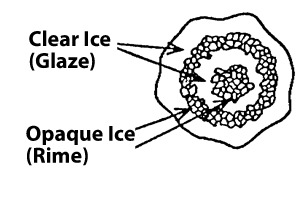
Should you ever get the chance, collect some large hailstones and cut them in half. You may find a layered structure, with alternate layers of clear and opaque ice (as in the picture on the right, which shows a section of a hailstone viewed by transmitted light). The layers are acquired in different parts of the storm clouds. As hailstones fall, they collect tiny water droplets, which flow around them and freeze. If no air is trapped, the ice is clear.

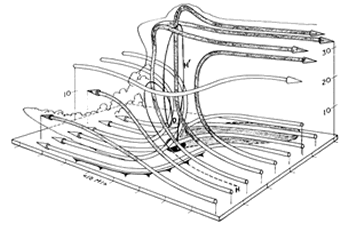
The storm which struck the Wokingham area of Berkshire on 9 July 1959 produced hailstones more than 2.5 cm in diameter. This storm was studied in detail by Professor Frank Ludlam of Imperial College and his team of co-workers, who produced a striking three-dimensional model of the airflow with-in the storm and explained how large multi-layered hailstones may form in such weather systems.

diagram of severe storm 3
This three-dimensional model is taken from a paper entitled Airflow in convective storms by K.A.Browning and F.H.Ludlam published in the April 1962 issue of the Quarterly Journal of the Royal Meteorological Society (Volume 88, pp.117-135).

In the diagram on the right, streamlines of air in which condensation occurred are shaded. The surface areas affected by rain and hail are shown by, respectively, grey and black shading. Heights are shown in thousands of feet. Precipitation formed in air which entered the storm near position H. As shown, the precipitation was carried across relative to the storm to around 13-15,000 feet, whereupon it fell and re-entered the strong updraught near posit-ion O. Some precipitation particles reached altitu-des of 30,000 feet or more and grew into large hail-stones before falling again, forward of the strong updraught, near position H’. The storm moved from left to right, with rain on its left flank and a squally ‘gust front’ (shown as a cold front) on its right flank. Behind the storm, chilled air reached the ground.

severe storm diagram

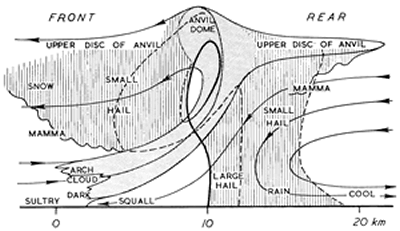
The diagram on the right shows a vertical section through a typical severe hailstorm (moving from right to left) and is also taken from Ludlam’s 1961 article in Weather. Compare this diagram with the three-dimensional model above

The paths of the air are drawn as if the storm was stationary. They are, therefore, relative streamlines. The dashed lines are trajectories of small hailstones. The thick full line shows the trajectory of a large hailstone.

To some extent, the features shown on this vertical section occur also in vigorous cumulo-nimbus systems which do not produce large hail. Students can look out for mamma, the udder-like cloud feature that hangs under the anvil and other parts of the cloud. How are mamma formed? Students can also observe gust fronts and measure the temperature drop that occurs when a storm passes. It is often several degrees Celsius. Perhaps, with the help of someone who has a car, they can map areas of rain and hail relative to moving storms.

severe storm diagram 2
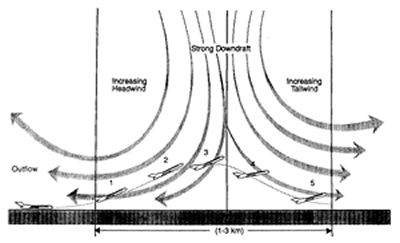
This diagram has been taken from The microburst hazard to aircraft by J.McCarthy and R.J.Serafin, published in Weatherwise in 1984 (Volume 37, pp.120-127)

In severe storms, downdraughts may be as strong as 30-40 m/s and reach the ground as ‘down-bursts’. These are dangerous, as the diagram above shows. Downbursts spread out near the ground. An aeroplane that flies into such an outflow first encounters an increasing head-wind (at 1 and 2), which adds to the speed of the speed of the air flowing over the aircraft’s wings and thus increases lift. At 3, however, the strength of the downdraught begins to reduce the altitude of the aircraft; and at 4 and 5 the aircraft experiences both a tail-wind (which reduces air speed and lift) and a downward force from the downdraught. Over the years, there have been many air disasters caused this way, especially in North America.

Cloudbursts

On 15 August 1952, the village of Lynmouth in North Devon was devastated by a torrent of water which poured off Exmoor; 34 people died. On 29 May 1920, in and around the Lincolnshire town of Louth, 22 people died when water from a storm over the Wolds caused the River Lud, normally a small stream, to rise 5 m above its normal level. In Dorset and Somerset, there have been similar occurrences; and in all cases, severe storms caused the havoc. When such storms occur in the British Isles, the wind in the upper troposphere is typically from the south-west, with the wind in the lower troposphere from a north-easterly point (and pressure low to the south and south-west). If this flow is lifted orographically, the storm may become stationary and deposit several inches of rain in a short time. Thus, it is places below slopes that face northwards or north-eastwards that are most at risk.

Hail Prevention

To frighten away the evil spirits that caused hail, primitive tribes used to shoot arrows into storm clouds; and Christians have tried to exorcise these spirits by ringing church bells (a dangerous practice because of lightning strikes on bell towers). Not only arrows, but also cannon-balls, artillery shells and rockets have been fired into storm clouds, but all to no avail. Though there is some evidence that cloud seeding may help to reduce the size of hailstones, there is nothing we can yet do to prevent the formation of severe storms.

Changing Climate: Climate Stripes

Image reproduced with permission from Ed Hawkins. https://showyourstripes.info

This image shows the warming stripes for the whole globe from 1850 – 2019. These ‘warming stripe’ graphics are visual representations of the change in temperature as measured in each country over the past 100+ years. Each stripe represents the temperature in that country averaged over a year.

Go to https://showyourstripes.info  and select climate stripes for a region of your choice.

  • Which region did you choose?
  • How has the temperature of your region changed over the period?
  • Roughly what proportion of the graph is mainly blue, and what proportion is mainly red? You could use a ruler to measure the graph to help you estimate this:
    Width of mainly blue area (w1) =
    Width of mainly red area (w2) =
    Total width (w1+w2) =
    Proportion of blue (w1 / total) =
    Proportion of red (w2/ total) = .
  • How does that compare to the graph for the whole world, shown above?
    Width of mainly blue area (w1) =
    Width of mainly red area (w2) =
    Total width (w1+w2) =
    Proportion of blue (w1 / total) =
    Proportion of red (w2/ total) = .
  • Looking at the stripes for your region, when does it look like the temperatures were changing fastest?
  • Looking at the stripes for the whole world, when does it look like the temperatures were changing fastest?

Extension Question: How do the climate stripes demonstrate the difference between weather and climate?

UK Synoptic Charts: Pressure and Wind Skills Exercise

Skills Exercise


You will need an Atlas for these activities

  1. Identify on the map a country experiencing HIGH pressure.                                                
  2. What type of air pressure is arriving in the UK?                                                                                            
  3. What is the lowest value of pressure shown on the map?                                                                           
  4. What is the air pressure over Greenland?                                                                                                     
  5. What is the air pressure over Northern Africa?                                                                                
  6. Identify an area that would have STRONG winds (the isobars will be close together)                                                                                                                    
  7. Identify an area that would have WEAK winds (the isobars will be far apart)                                 


EXTENSION– can you draw simple arrows to show the pattern of wind over the UK on the small inset map? (recall that wind moves from high to low and is deflected to the left in the Northern hemisphere) 


3D Print the Weather

The RMetS is delighted to have collaborated with CREATE Education to develop instructions to allow schools to 3D print sections of the Central England Temperature Record and use their models to learn about weather, climate, extreme weather and climate change.

These engaging, tactile resources allow students to get a hands-on experience of what climate is and how it can change, and how extreme weather relates to the climate.

The Central England Temperature (CET) data record is the longest instrument record of temperature in the world, with average monthly temperature each month from January 1659 to December 2018.

This project and the accompanying resources allow you to create 3D models that will represent 10 years of temperature data. The models have been designed to interlink, so students can create a series of models to represent larger timeframes. Once the 3D models have been created and 3D printed, there is a tactile resource that can be used in multiple ways in the classroom to visualise and study past weather and climate, and at how the climate of the UK has been changing over time.

The lesson resources specifically focus on

1. The difference between climate and weather

2. The current climate of the UK

3. The changing climate of the UK

4. Looking at past extreme weather events and researching their impacts on people in the UK.

3D model

Further resources to teach weather, climate, correlation, photosynthesis, regression, the carbon cycle, isotopes and more.

Further resources past climate change teaching resources for secondary geography.

Depressions – Identifying Features

Identify the weather features on the synoptic (weather) chart below:

Cold Front

Warm Front

Highest pressure

Depression

Anticyclone

Isobar

Occluded Front

Strong Wind

Light Wind

Lowest Pressure


Advanced

Northerly Wind

Northwesterly Wind

Southwesterly Wind


(hint the clouds in the images below are cirrus, cumulonimbus, cumulus and nimbostratus)

cirrus
cumulus
Cumulonimbus
synoptic chart extract
MetLink - Royal Meteorological Society
We use cookies on this site to enhance your user experienceBy clicking any link on this page you are giving your consent for us to set cookies. More info

By clicking any link on this page you are giving your consent for us to set cookies. More info