According to the IPCC report for Policymakers “In 2019, atmospheric CO2 concentrations were higher than at any time in at least 2 million years, and concentrations of CH4 and N2O were higher than at any time in at least 800,000 years. Since 1750, increases in CO2 (47%) and CH4 (156%) concentrations far exceed, and increases in N2O (23%) are similar to, the natural multi-millennial changes between glacial and interglacial periods over at least the past 800,000 years.”1

Source:IPCC1
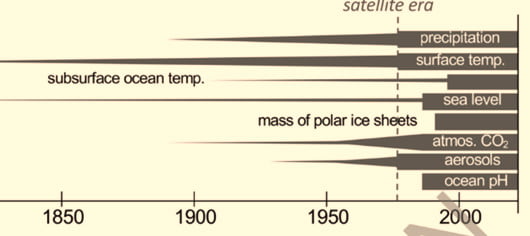
To gather information about the climate scientists need to use a wide range of sources. As can be seen on the graphic opposite, from 1800 onwards scientists can rely upon observations collected by various instruments. However to really understand climate change we need to examine longer term patterns going back thousands two hundreds of thousands of years. The evidence that we have for these can be taken for various sources as can be seen on graph B showing paleoclimatic sources of evidence. Paleoclimate is just a way of saying climate from the geological past.
Select one of the sources of instrumental observations and one of the paleoclimatic evidence and conduct some research into it.
Complete the tables to evaluate the methods of showing climate change.




Pathway: Climate
Past Climate Change – Changing Global Climate – UK Climate – Changing UK climate
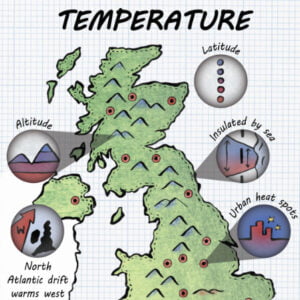
Lesson overview: In this lesson we use the Central England Temperature record to explore changing UK weather and look at the projected impacts of climate change on the UK.
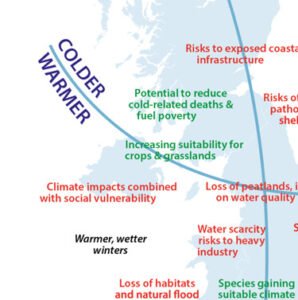
The UK climate has always changed and in over recent decades has become warmer. Over the coming century it is projected to become warmer and wetter in winter and hotter and drier in summer. Although change is unlikely to be dramatic, its cumulative impact will be significant and will affect human populations, landscapes and the natural world. Adaptation and mitigation can help to ameliorate some of the negative impacts of our changing climate, though some populations, landscapes and ecosystems could be severely affected if the most extreme forecasts are realised.
Learning objectives:
To understand how climate (precipitation and temperature) has changed over time in the UK
To be able to classify the potential impacts of changing climate on the UK.
Key Teaching Resources
Changing UK Climate PowerPoint
Changing UK Climate PowerPoint (easier)
Changing UK Climate Worksheet
Changing UK Climate Worksheet (easier)
Changing UK Climate Homework
Changing UK Climate Futures Homework
Teacher CPD/ Extended Reading
Read Changing UK Climate_More for Teachers
Or watch
Alternative or Extension Resources
How does climate change lead to changes in extreme weather? (reference material)
Steart Marshes – looking at the evidence for developing salt marshes to protect land from rising sea levels.
Graphs showing past and future changes in UK climate. Associated teaching resources can be found on the RGS website.
3D print the Central England Temperature record and use it in lessons.
Climate change in the UK and the UN Sustainable Development Goals

Pathway: Climate
Past Climate Change – Polar Climate – Hot Deserts – Changing Global Climate
Lesson overview: In this lesson we look at this historical relationship between carbon dioxide and global temperature and the Greenhouse Effect before moving on to consider future greenhouse gas emission scenarios.
Greenhouse gases warm the Earth through intercepting the flow of heat from the Earth into space. The Intergovernmental Panel on Climate Change has co-ordinated research that shows unequivocally that global climate has changed as a result of the impact of humans on the concentration of greenhouse gases in the atmosphere and other aspects of the climate system and will continue to do so. Neither the magnitude nor impacts of climate change will be uniformly felt around the world. As our understanding of predicted impacts continues to improve so does our ability to prepare for them. Uncertainty stems from several sources – the response of governments, human populations, complex interactions and feedback effects between different components of the climate system.
Learning objectives:
To be able to describe the major changes to temperature and CO2 over short and longer periods of time.
To be able to explain global warming and reasons why climate changes.
To evaluate what might happen to CO2 levels and temperature in the future.
Key Teaching Resources
Changing Global Climate PowerPoint
Changing Global Climate PowerPoint (easier)
Changing Global Climate Worksheet
Changing Global Climate Worksheet (easier)
Changing global climates homework
Teacher CPD/ Extended Reading
Read
Changing Global Climate – More for Teachers
Or watch (3 films)
Alternative or Extension Resources
Changing climate: Climate stripes
Climate change graphs (basic)
Which regions have been affected the most by climate change (advanced)
Comprehension exercise – investigating the evidence for the impact of humans on climate (advanced)

The RMetS is delighted to have collaborated with CREATE Education to develop instructions to allow schools to 3D print sections of the Central England Temperature Record and use their models to learn about weather, climate, extreme weather and climate change.
These engaging, tactile resources allow students to get a hands-on experience of what climate is and how it can change, and how extreme weather relates to the climate.
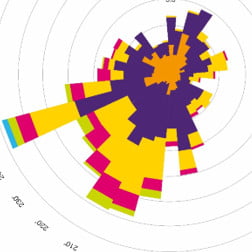
The Central England Temperature (CET) data record is the longest instrument record of temperature in the world, with average monthly temperature each month from January 1659 to December 2018.
This project and the accompanying resources allow you to create 3D models that will represent 10 years of temperature data. The models have been designed to interlink, so students can create a series of models to represent larger timeframes. Once the 3D models have been created and 3D printed, there is a tactile resource that can be used in multiple ways in the classroom to visualise and study past weather and climate, and at how the climate of the UK has been changing over time.
The lesson resources specifically focus on
1. The difference between climate and weather
2. The current climate of the UK
3. The changing climate of the UK
4. Looking at past extreme weather events and researching their impacts on people in the UK.
Further resources to teach weather, climate, correlation, photosynthesis, regression, the carbon cycle, isotopes and more.
Further resources past climate change teaching resources for secondary geography.
Pathway: Basic weather/ Climate
Weather and Climate – Atmospheric and Oceanic Circulation – Climate Zones – Past Climate Change
Lesson overview: In this lesson we look at how global temperatures have changed over the last 400,000 years and investigate volcanoes and the Milankovitch cycles as the drivers of change, in preparation for a more detailed look at anthropogenic climate change in later lessons.
We know about the past climate of Earth from instrumental records and paleoclimatology in which we reconstruct global climate from proxy variables including air trapped in ice bubbles and preserved organic remains. There are several major natural influences on the climate including the Milankovitch cycles, which describe the combined effect of changes to our planets orbit around the Sun, volcanic activity, the Sun and continental drift. By understanding these, we are able to model past climates and improve our understanding of the Earth’s climate system.
Learning objectives:
To be able to describe the major changes to temperature over long periods of time.
To be able to explain why climate changes over time.
Key Teaching Resources
Past Climate Change PowerPoint
Past Climate Change PowerPoint (easier)
Past Climate Change Worksheet
Past Climate Change Worksheet (easier)
Little Ice Age Mystery Homework
Little Ice Age Mystery Homework (with key)
Little Ice Age Mystery (for Teachers)
Teacher CPD/ Extended Reading
Read
Past Climate Change – More for Teachers
Or watch
Alternative or Extension Resources
Mystery: Why do we expect a white Christmas?
Using tree rings to explore past weather and climate
Past Climate Change Teaching Resources
Research exercise – looking for sources of evidence for past climate change (advanced)

 These resources explore the climate of five different scale periods of the past 2.6 million years. Within each, some of the basic processes affecting the climate are investigated. Please feel free to adapt the resources to the level and ability of the students you teach.
Module 1 – the last 2.6 million years: Milankovitch Cycles, Supervolcanoes
Module 2 – the last 11000 years: The Holocene
Module 3 – the last 2000 years: the Medieval Warm Period and the Little Ice Age
Module 4 – the last 500 years: Volcanoes
Module 5 – the last 200 years: the Sun, the Anthropocene and the Greenhouse Effect
Notes on the sources of data used.
Guide to sources of paleo-climate data.
Acknowledgements
These resources were jointly produced by Dr Kathryn Adamson (Manchester Metropolitan University), Dr. William Roberts (Bristol University), Dr. Chris Brierley (University College London) and the Royal Meteorological Society.
 These resources were Highly Commended by the Geographical Association, who noted that they give teachers structured access to curriculum topics that are otherwise not readily found with up-to-date data from paleo-climate experts.
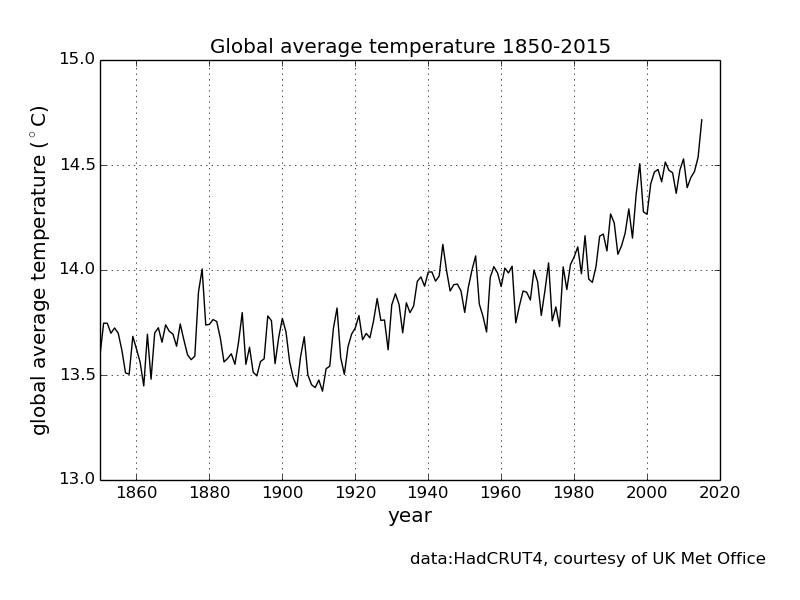
Climate graph, 200 years, without uncertainty
Climate graph, 200 years, with uncertainty

PowerPoint explanation of the Impact of the Sun on Climate
PowerPoint Introduction to the Greenhouse Effect, Global Warming, Global Dimming and the Hiatus
Using tree rings to teach past climate change
Resources based on 3D printed sections of the Central England Temperature record.
Tempest database of extreme weather events in the UK
Is the Sun a Major Driver of Recent Changes in Climate? IPCC WG1 FAQ 5.1
Anthropocene investigation resource from the Geological Society.
Climate Change Teaching Resources
Climate Change Updates for Teachers.
Climate Change Updates for A level Geography
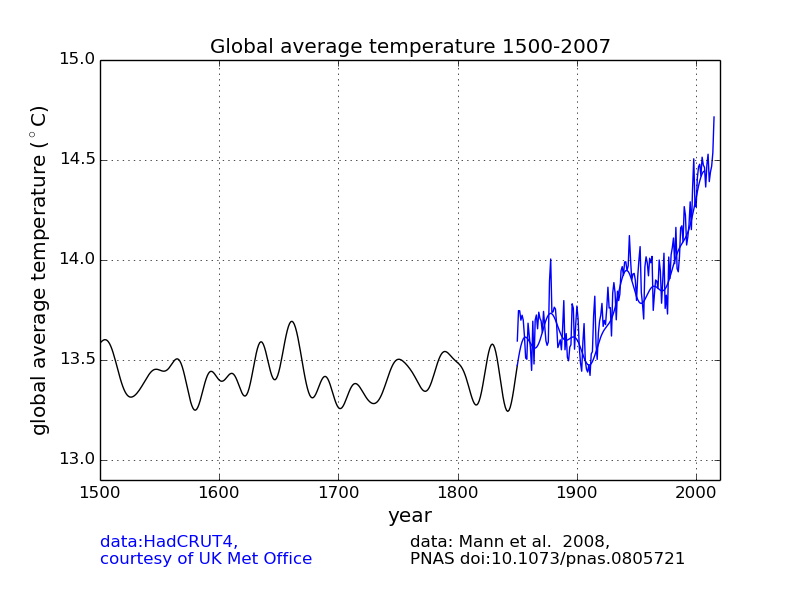
Climate graph, 500 years, without uncertainty
Climate graph, 500 years, with uncertainty

PowerPoint explanation of the impact of Volcanoes on Climate
Investigation – the Year With No Summer and corresponding
PowerPoint
Using tree rings to teach past climate change
How Do Volcanic Eruptions Affect Climate and Our Ability to Predict Climate? IPCC WG1 FAQ11.2
1816 – the year without summer: the experience of Newcastle-upon-Tyne
Situating 1816, the ‘year with no summer’, in the UK
< Module 3 – the last 2000 years | All Modules | Module 5 – the last 200 years >
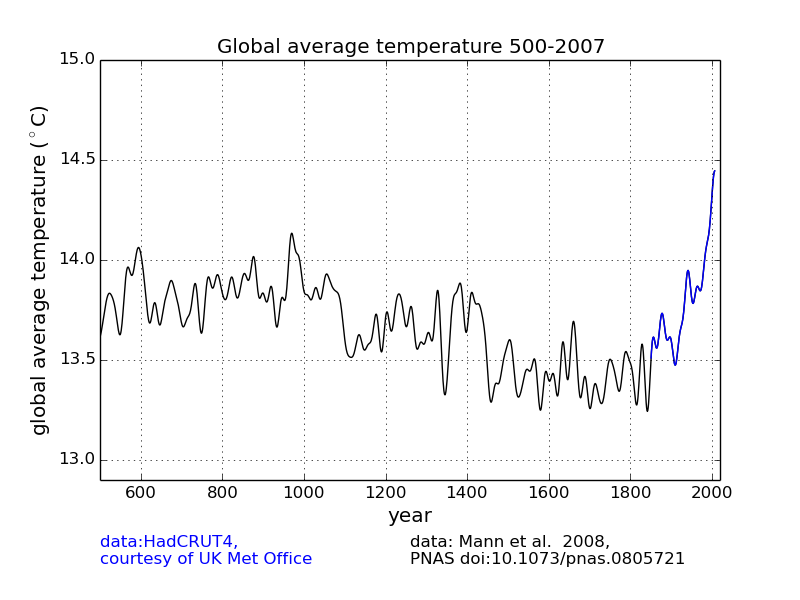
Climate graph, 1,500 years, without uncertainty
Climate graph, 1,500 years, with uncertainty

PowerPoint explanation of Medieval Climate Anomaly and the Little Ice Age
Did the European Conquest of the Americas Contribute to the Little Ice Age?, Teaching Geography, 2019
KS3/ 4 Causes of Climate Change in the Little Ice Age Worksheet and Teachers’ Notes
A Level – The Impact of the arrival of Europeans in the Americas on the Carbon Cycle –Worksheet and Teachers’ Notes.
Investigation – Little Ice Age in London
Case study – Medieval Climate Anomaly and the Vikings
IPCC 2001: Was there a “Little Ice Age” and a “Medieval Warm Period”?
Little Ice Age scientific summary paper
The Great Snow of winter 1614/ 1615 in England: a paper looking at contemporary reports of extreme weather.
< Module 2 – the Holocence | All Modules | Module 4 – the last 500 years >