Categories
Blog Research Secondary

Participate in the Climate Literacy Survey 2026

Survey open January - March 2026!

Get your students involved in the RMetS Climate Literacy Survey 2026!

Why?

Climate education is a vital driver of climate action, and is linked to the Paris Agreement, the COP process and future PISA education benchmarks.

By collecting data annually, we hope to build on our existing evidence of the state of climate literacy amongst school leavers in the UK and Crown Dependencies by:

  • Identifying regional and other variations in school leavers’ understanding of climate change and its impacts.
  • Tracking the impact of changing curricula and other education policies or national scale interventions on the climate literacy of school leavers.

In England, participating in the Climate Literacy Survey could form part of your school’s Climate Action Plan

We hope to be able to offer free, online teacher CPD to schools who contribute to data collection in 2026, including evidence collected from the survey. 

What?

  • The survey is quick, taking 5-8 minutes to complete.
  • Surveys should be completed individually and in school time. Students will need to have access to a device and be connected to the internet to participate.
  • There are 4 sections:
    • Section 1 : ‘About you’. A few questions about the participant.
    • Section 2 : ‘About your school’. A few questions about your school. Teachers should provide the school’s postcode.
    • Section 3 : Core questions. Every participant will be asked these 5 climate questions.
    • Section 4 : Randomly assigned questions. 5 questions will be randomly assigned to the participant.
  • No individual results will be fed back to participants or schools. Please stress to students that there is nothing to be gained by looking up answers or copying others’ responses.

Who?

The Climate Literacy Survey (CLS) is for secondary school leavers:

  • England, Wales, Jersey, Guernsey and Isle of Man – Year 11
  • Northern Ireland – Year 12
  • Scotland – S4

Data from other year groups will not be analysed. 

When?

The survey is open from 1st January –  31st March 2026.

Rules

If these rules are not followed data will not be included in analysis as it will not pass the data cleaning process.

The survey MUST:

  • Be completed online in school time.
  • Be completed individually, but within a class group setting, preferably a mixed ability, mixed subject class such as a tutor/ form group rather than an eco club. The survey is not curriculum linked or dependent in any way. 
  • Be completed by the correct age group.

Climate Literacy Survey reports to date:

Categories
Blog Curriculum Geography maths Secondary Teaching

Classroom Resources for COP30

The 2025 United Nations Climate Change Conference, or Conference of the Parties of the UNFCCC, COP30, will be in Belém, Brazil, from 10th to 21st November 2025.

Key aims for the conference are to assess the progress signatories of the Paris Agreement have made towards reducing their greenhouse gas emissions, scaling up financing to developing country Parties to enable climate action and to launch an investment fund specifically to reward forest conservation in Tropical countries.

In order to help teachers engage students with what is occurring, we have developed two resources:

COP30 Brasil Amazonia
Categories
Blog Climate CPD Geography Secondary Teaching Weather

More For Teachers’ CPD video series released

Back in 2021 we released the Weather and Climate Teachers’ guide,  accompanied by resources for the classroom and teacher CPD.

We are now happy to announce that the CPD ‘More For Teachers’ documents are now available as a series of short films on our YouTube channel.

The videos, like the guide, are aimed at secondary geography teachers to support the delivery of weather and climate lessons to 11–14+ year old students. They are not linked to any specific curriculum and should support teaching across all of the UK.

See the first video here:

Categories
Blog Climate Change Curriculum Primary Secondary Teaching

New Resources: Climate and Biodiversity Stripes

We’ve been delighted to work with Mastery Science to develop two new science teaching resources which are based on the climate and biodiversity stripes. 

These visually striking images instantly convey information about changing global climate and biodiversity. 

In the primary resource, students investigate the potential use of green walls to increase biodiversity on their school estate and adapt to climate change. 

In the secondary resource, students prepare an (imaginary) submission for the Earthshot prize based on planting Kelp to mitigate climate change and increase biodiversity. 

Climate quality mark December 2024
Categories
Blog Climate Change Curriculum Secondary Teaching

Climate Change in AQA GCSEs

This week, the AQA exam board has published booklets for teachers of their Science, Geography, Maths, Religious Studies, Citizenship. Design and Technology and Psychology GCSE specifications, showing how the current specifications can be used to deliver the climate education that students are asking for and need to equip them with the green skills for the future workforce

Building on the reports we published in 2023, the booklets exemplify how teachers can demonstrate to students that the skills and understanding that they are already being taught can be applied to the context of climate change, adaptation and mitigation, without increasing curriculum content or teaching load.

In science in particular, in work led by Natalie Vlachakis and supported by the RMetS, teachers are given ideas for how, through considerations of sequencing, to link learning across physics, biology and chemistry in order to deliver a cohesive and holistic climate education.  

Categories
Blog Climate Change Curriculum maths Schools Secondary Teaching

Climate Calculations Challenge

Climate Change Calculations Logo

Maths is at the centre of all things science, and climate change is no different. To understand climate change, scientists have measured many climatic and weather variables such as temperature, rainfall accumulations, pressure and atmospheric CO2 concentrations. Mathematical skills allow us to explore these observations, finding trends and looking at the statistics. Maths allows us to create equations that allow us to work out what will happen in the future, be it the weather for the weekend or predicting the future climate in 50 years. Maths also helps us to unpick the social science of climate change.

Solving climate change needs brainy mathematicians!

Challenge:

As part of Maths Week Scotland we are challenging secondary students in Scotland to explore the broad topic of climate change and the many possible links it has to mathematics by writing their own maths problems and questions.

This challenge will be split into two sections: writing questions and peer reviewing questions from another group/class.

Part 1: Writing questions

The Royal Meteorological Society (RMetS) has recently released the Climate Change Concept Association Tool which brings together more than three hundred climate change concepts in an engaging illustration of how they are linked.

Climate change is linked to 3 main terms – causes, policy and impacts. We are going to focus on causes and impacts.

Climate Change Concept Association Tool Causes and Impacts

We suggest splitting the two topics into 2 days; writing questions for causes on Monday 23rd September and impacts on Tuesday 24th September. However, the competition will be live before Scottish Maths Week so you can deliver the question making sessions when it best suits your teaching pattern.

The questions must be linked to each of the topics associated with the ‘causes’ and ‘impacts’ of climate change. The questions should be set at National 4/ 5 level in terms of mathematical skills and style.

Click below to see an example question if the topic set was ‘climate action’.

There are 8 topics associated with CAUSES (Monday): 

  • Climate justice 
  • Science 
  • Feedback loops 
  • Greenhouse gas emissions 
  • Land use change 
  • Natural variability 
  • Liability 
  • Anthropogenic
Climate change concept association tool - causes

There are 24 further topics associated IMPACTS (Tuesday).

However, we are going to focus on the 10 terms in bold for the questions:

  • Arctic/Antarctic
  • Anthropocene
  • Adaptation
  • Behavioural change
  • Climate zone shift
  • Climate justice (already done on Monday)
  • Communication
  • Ecosystems
  • Evidence
  • Extreme weather
  • Feedback loops (already done on Monday)
  • Global atmospheric circulation
  • Health
  • Hindcasts/projections
  • Individuals
  • Infrastructure
  • Impact assessment
  • Land use change (already done on Monday)
  • Migration(people)
  • Oceans
  • Permafrost
  • Regional climate change
  • Resource loss
  • Society
  • Social science
  • Soil heath
  • Small island developing states (SIDs)
Climate change concept association tool - impacts

We advise breaking the class into small groups (of no more than 3) and tasking each group with a couple of topics each. You will need to keep track of who worked on which questions, as there are prizes on offer – however, please don’t tell us the students’ names. For the terms that need more explanation, there is also a glossary on our website. 

 
You can also contact education@rmets.org at any point up to and during the week – just include ‘Maths Week Scotland’ in the subject heading.
 
Some topics may be more challenging than others, for example creating a maths question around liability. You can use the Climate Change Concept Association Tool for this. Click on liability and it will give you further linked topics. Looking at the glossary term will give you some hints and tips to what the context for the climate could be. Encourage your students to do research into the topics, allowing them to explore and come up with creative questions (some resources: Climate websites). Please note that if the questions involve data, graphs or specific values the references should be included. Questions written should be original. Originality will be checked as part of the reviewing process.
 
All final questions must be written into the submission document (which can be accessed on the competition hub) and then this emailed to education@rmets.org by 11pm on Tuesday 24th September
 
Please make use of the equation editor on PowerPoint if needed, or there are many online equation editors if you would prefer. Please make sure a teacher submits the questions on behalf of the class or a legal guardian if the competition is entered by a student who is home schooled. Entries must be made from Scottish Schools or students who are home schooled from an address in Scotland.


Part 2: Peer reviewing

You will then be given the opportunity to contribute to the reviewing process for the competition. You will score the questions written by another team/school against a number of criteria provided in the score card (which can be accessed on the competition hub). This peer reviewing process will be kept anonymous. Your peer review scores will then be combined with the expert review, undertaken by the RMetS education team and supported by Dr Frost Learning. The expert review will also include the plagiarism checks.

You will receive an email from education@rmets.org by the morning of Thursday 26th September with your assigned questions for reviewing. You will then have until Friday 4th October to complete the reviewing process. We suggest that either the whole class does all the questions and scores each question together, or similarly to the creating process, you split the class into smaller groups to focus on just a few of the questions.

The scores must then be filled in on the score card. Again, please make sure that the form is sent by a teacher or adult on behalf of the group or entrant. Return to education@rmets.org by 11pm Friday 4th October.

Prizes:

18 prizes are on offer – a £5 Amazon voucher per student for the best question written in each topic (up to £15 per group). We will contact you, the teacher/guardian, if one of your questions has won. It is then your responsibility to pass the prize on to the correct group of students who wrote the winning question.

In addition to this, each school/class which submits an entry for all 18 linked questions will be awarded with a certificate.

Future use of questions:

RMetS will add the winning questions from each topic and any other suitable questions to the bank of resources that exist on our education platform, MetLink (similar to the question provided as an example earlier in this document). The questions will be uploaded anonymously to the website, referencing that the questions were created through the Climate Calculations Challenge in collaboration Dr Frost Learning, and supported by Maths Week Scotland.

Climate Calculations Challenge Timeline

All documents for the Climate Calculations Challenge, including presentations slides and entry forms, can be found on the challenges page of the Maths Week Scotland website.

Categories
Climate Climate Change CPD Geography Microclimates Schools Secondary Teaching Weather

Weather and Climate: updated Teachers’ CPD

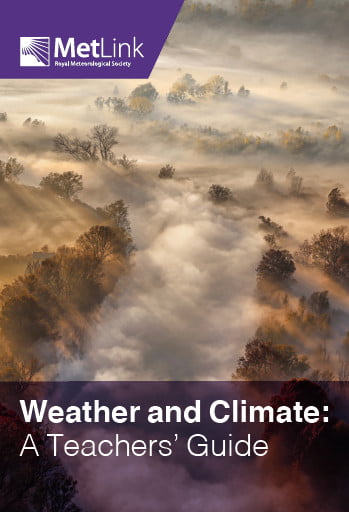
weather and climate teachers guideWe have just updated and extended the ‘More for Teachers’ information associated with our award-winning Weather and Climate: a Teachers’ Guide. These information sheets are designed to provide CPD for teachers of geography who would like to improve or update their weather and climate subject knowledge. 

The teachers’ guide and the accompanying online teaching resources, aim to give UK geography teachers all that they need to deliver relevant, engaging and thorough weather and climate lessons to 11–14+ year old students. They are not linked to any specific curriculum but should be easily adaptable to all.

There are 20 topics or chapters. Across these, there are three threads or paths which can be taken through the online resources, depending on the teaching time available:

Basic weather: Weather in our lives, weather measurements, weather and climate, global atmospheric circulation, global climate zones, air masses, pressure and wind and water in the atmosphere

Climate: Weather and climate, global atmospheric circulation, global climate zones, past climate change, polar climate, hot deserts, changing global climate, UK climate, changing UK climate, the climate crisis

Extending weather: Anticyclones, depressions, microclimates, urban weather, tropical cyclones.

The Royal Meteorological Society believes that:

  • all students should leave school with basic weather literacy that allows them to understand the weather that affects them, their leisure activities and the careers they choose to follow
  • every student should leave school with basic climate literacy that would enable them to engage with the messages put forward by the media or politicians and to make informed decisions about their own opportunities and responsibilities.

To this end, we have embedded a climate change thread throughout the online resources, showing its relevance to both weather and climate. An understanding of weather and climate is fundamental to an understanding of climate change.

There is a progression of knowledge through the topics, supported by review and assessment activities. The resources also progressively develop key geographical skills such as data, mapwork, GIS, fieldwork and critical thinking.

We also include common misconceptions which should be challenged in the classroom.

Many of the online teaching resources are available with standard or easier versions, as well as extension or alternative activities.

Find the scheme of work, teaching resources, background information for teachers, as well as the Teachers’ Guide here

Categories
Science Secondary

New Resource – Carbon Dioxide in the Atmosphere

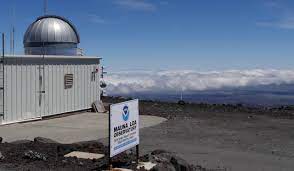
Mauna Loa Observatory NOAA

Bringing together learning from biology and chemistry topics in GCSE science, this new resource explores the seasonal cycle in atmospheric carbon dioxide concentrations as well as the year-on-year increase due to human activities.   

Categories
Climate Change maths Secondary Weather

Maths Resources for Scotland’s Curriculum

maths for planet earth

We are delighted to have worked with Education Scotland to tweak some of our maths resources to align them with Scotland’s Curriculum. 

These resources were developed a couple of years ago in conjunction with MEI, and allow teachers to demonstrate to their students how their maths skills are relevant to their understanding of issues associated with climate change.  

Categories
Extreme weather Geography Secondary Weather

New Animation – Storm Surges

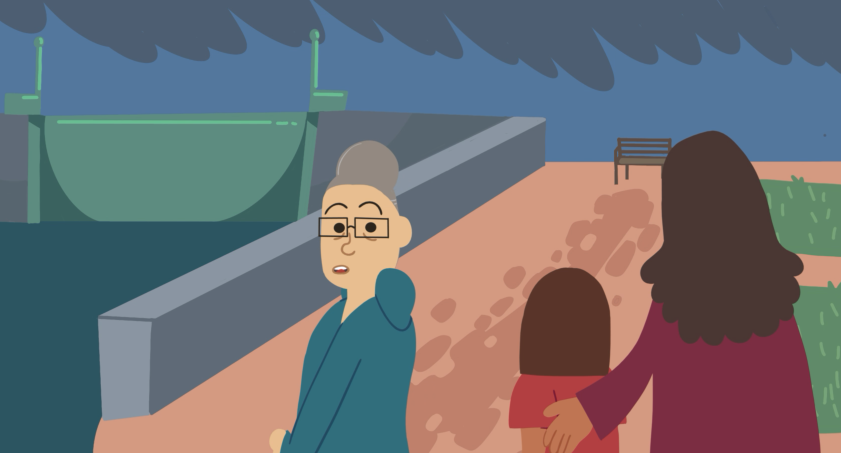
storm surge flood barrier

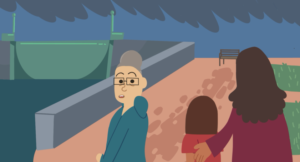
We are delighted to have worked with Seth Jackson Animation and the staff and students at Boston College to produce a new animation, explaining what factors combine to give us storm surges in the UK, their impacts, adaptations and how climate change will affect them. There’s also a knowledge organiser for students to take notes on and summarise their learning. 

MetLink - Royal Meteorological Society
We use cookies on this site to enhance your user experienceBy clicking any link on this page you are giving your consent for us to set cookies. More info

By clicking any link on this page you are giving your consent for us to set cookies. More info