Categories
Extreme weather Snow

When will it snow?

What are the requirements for snow?

There are three main requirements for snow, these are:

  1. Moisture

    There must be water vapour in the air for clouds to form. In the UK, surrounded as we are by sea, this is rarely a problem. As water warms up and cools down more slowly than land, the sea around us stays at a pretty constant temperature all year round and is a constant source of water vapour into the air above, through evaporation.

    It can be ‘too cold for snow’ in the centre of large land masses, such as Eurasia, Antarctica or N. America, where the wind has not encountered liquid water from which water can easily evaporate. It’s really ‘too dry for snow’ – but it’s too dry because it is so cold that the rate of evaporation from the lakes and rivers, which may be frozen, is very, very slow. 

  2. Cloud

    For clouds to form, the rate of evaporation must be lower than the rate of condensation. Evaporation and condensation are going on all the time, but the rate of evaporation falls as it gets colder. So, clouds can form when the air cools – there are several possible mechanisms for this

  • Where warmer air meets colder air at a front, causing it to rise. As the air rises, the air pressure falls and so the air cools (this is known as adiabatic cooling).
  • When air from somewhere colder than us (i.e. Arctic maritime of Polar Continental air masses) approaches the UK, is warmed from below as it travels over relatively warm land or sea which causes it to rise and cool. This is the most common source of snow in the UK.
  • When air is forced to rise over the coast, hills or mountains and, as it rises, cools. This mechanism can add to, or enhance, the formation of cloud by either of the other mechanisms above.
  • If the ground cools overnight, the air in contact with the ground can cool to the temperature at which cloud forms. This is fog and is not likely to produce rain or snow.
  1. Temperature

    It has to be cold enough for the cloud droplets to grow as snowflakes and to not melt as they fall through the atmosphere and down to the ground.  To see whether this is the case, forecasters look at the 528dam (=5280m) line. This line shows where the vertical thickness of the bottom half of the atmosphere (by mass) is 5280m i.e. the vertical distance between the 1000mb height (somewhere near the ground) and the 500mb height (somewhere in the middle of the troposphere). As warm air is less dense than cold air, the smaller this distance, the colder the air is.

If we are north of the line (i.e. the thickness is less than 528dam) then any precipitation can fall as snow, and if we are south of the line (i.e. the thickness is greater than 528dam) then we get rain.

If you look at the surface pressure forecast charts on the Met Office website, then if you go more than 24 hours into the future the thickness lines are shown. The 528dam line is shown as a blue dashed line, and the thicker/ warmer 546dam line as a green dashed line.

Another way to find out is to look at the weather forecast charts (in the charts and data menu) at http://www.netweather.tv/index.cgi?action=nwdc;sess= and select ‘HGT 500-1000’ from the ‘select chart type’ menu If the 528dam line is South of where you are, and there is a forecast of precipitation, then that precipitation is likely to be snow.
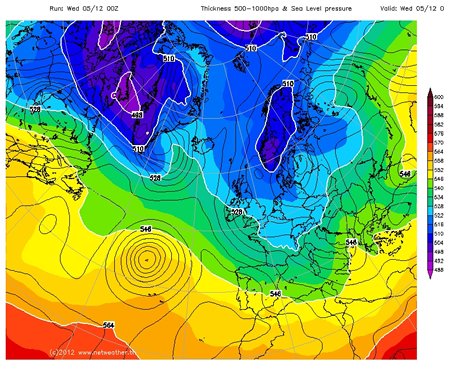
will it snow isobars
Image of the UK, 5th December 2012

It is also worth having a look at a cross section through the atmosphere for example at http://www.wetter3.de/ – select ‘Vertikalschnitte’ which gives a longtitude/ height cross section for 50N (move the pointer on the right side of the left hand map to change the latitude of the cross section). The air between the clouds and the ground has to be cold for snow to reach the ground.

Lesson Idea

Using the information above, can your students identify which countries/ regions should have a forecast of snow? At the basic level, they can just look and see where is inside the 528 line. More advanced students should try to predict where there will be precipitation. 

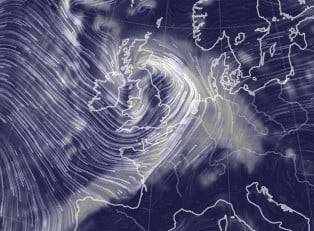
Nullschool is a great resource for visualising air flow and air masses. 

When do we get snow in the UK?

More information from the Met Office about Snow in the UK and forecasting snow.

A nice explanation of why we had such a different November in 2011 to the weather in November 2010 from the Met Office and a report on the 2010 snow and its impacts on the UK.

And an article from the BBC about what constitutes a white Christmas. 

Snow inspired science teaching ideas from Science in School.

White Christmas – an article from MetMatters

Snow inspired geography teaching ideas from the GA.

How to make a snowflake, from the Institute of Physics

From Brilliant Maps; the probability of a white Christmas across Europe

Categories
Blog Extreme weather Teaching

Climate Clarity: common climate misconceptions

Presently, climate education falls within the remit of science, and predominantly geography. If we broaden this perspective to assess where climate literacy sits, it is a similar story. Climate literacy does not have a universal definition; however we do know it is not limited to ‘climate science’ knowledge. It includes understanding of actions and solutions, covering both personal, corporate and (inter-)governmental responsibility, and needs to instil a sense of hope in young people. With this definition in mind, climate literacy is also currently taught primarily in the geography classroom.

At COP27, UNESCO’s Stefania Giannini said ‘Education is the most transformational climate adaptation action’. For this to ring true the education provided needs to be relevant, up to date and accurate, preventing the perpetuation of common misconceptions.

Here we address eight of the commonest weather and climate misconceptions we have identified in teaching resources and assessment materials, and evidenced in responses to the Royal Meteorological Society’s annual climate literacy survey.

The article was published in the Geographical Association’s (GA’s) ‘Teaching Geography’ journal.

Thank you to the Geographical Association for the permission to host the article on MetLink too.

Print
Categories
Blog Extreme weather Teaching

Hurricane Humberto to Storm Amy – is it just a name change?

Weather headlines are popping into the news at the moment, with some taglines wrongly indicating Atlantic hurricanes are on the way to the UK! Let’s clear this up!

We will not experience a hurricane any time soon in the UK. Hurricanes transition to extratropical cyclones by the time they hit the UK, and instead ‘arrive’ in the UK in a very similar form to the usual Low pressure systems the UK gets, perhaps bringing a little warmer (Tropical maritime air) and more moisture than normal. The storm making the headlines is forecast to move over the UK  late Friday 3rd and into Saturday 4th October 2025 and is expected to be very strong. Due to the strength it has now been named Storm Amy to make people aware of the risks it poses and the actions needed to stay safe.

Currently there are two Tropical cyclones  located off the east coast of the United States of America (Figure 1). In the North Atlantic Tropical cyclones are called hurricanes, a term also used for tropical cyclones in the north-eastern and central Pacific. These hurricanes are large low-pressure systems that are transporting large amounts of heat and moisture poleward from more Tropical regions, contributing to the atmosphere’s natural processes to balance out the energy imbalance between the Equator and the Poles.

National Hurricane Center Outlook 1st October 2025
Figure 1. Position of Hurricane Imelda and Hurricane Humberto on 1st October 2025. Source: National Hurricane Center.
National Hurricane Center Cone Archive 1st October 2025
Figure 2. Major Hurricane Humberto with wind speeds of 160mph. Source: National Hurricane Center.

Hurricane Imelda and Humberto are both (as of 3pm 1st September 2025) categorised as Category 1 hurricanes on the Saffir-Simpson scale. Imelda is currently positioned where conditions are still favourable for the hurricane to strengthen to become Category 2 hurricane later today. 

Humberto is in a slightly later stage of its lifetime, having previously peaked at the very top of the Saffir-Simpson scale, Category 5, earlier in the week when sustained winds reached 160mph winds (Figure 2). This classified Humberto as a major hurricane.

Now Humberto is moving into unfavourable environments for hurricane development and is expected to weaken. It will then go through a process called extra-tropical transition by the end of the day and it is this process which ensures a hurricane will not be hitting UK shores. It essentially transitions the hurricane to what we know as a ‘normal’ area of low pressure. 

Having two hurricanes in the North Atlantic at the same time is not unusual, and the occurrence of major hurricanes is become less unusual. One known impact of climate change is having a higher proportion of intense tropical cyclones or major hurricanes. This does not mean we are having more hurricanes per year overall, it is the intensity in windspeeds and precipitation that is increasing.

However, the proximity of the two hurricanes is unusual. These two cyclones rank 10th in the list of closest named storms since 1966, with 582 miles between the hurricanes. When cyclones get close enough, less than 900km (~560miles), their wind fields can interact with one another in a process called the Fujiwhara effect. The Fujiwhara effect can cause cyclones to ‘dance’ or rotate around one another and sometimes even merge. Imelda and Humberto are not projected to merge but are interacting.

How will these hurricanes impact our weather in the UK?

We know from our understanding of the Global Atmospheric Circulation that there are westerly winds in the mid-latitudes and because of this the now hurricanes, but future ex-hurricanes, will be carried across the Atlantic towards the UK (Figure 3).

Humberto to Storm Amy
Figure 3. Left: Position of Hurricane Humberto now (Wednesday 1st October). Right: Forecasted position of Humberto, then named Amy, on Friday 3rd October. Shows the easterly movement across the Atlantic. Weather charts taken from WXCharts.com on 1st October 2025.

Humberto, once downgraded to an extratropical cyclone is expected to make its way over the Atlantic in very favourable locations for deepening the Low pressure and therefore strengthening the storm.

When on the western side of the Atlantic, ex-Tropical Humberto is expected to be in a right jet entrance (where the jet stream is speeding up or accelerating), and as it approaches the UK it is expected to be in the left exit region of the jet, both places that encourage rising motion, a reduction of air mass in the centre of the system and therefore cyclogenesis or deepening of a storm.

We can see by Friday evening (Figure 4) and into the early hours of the morning that there are very tightly packed isobars around the system, indicating the Low pressure, but also the extremely high winds that this storm will bring to the UK. Even after the centre of Storm Amy has moved NE of the UK on Saturday (Figure 5), the isobars are forecasted to stay tightly packed together and the strong winds will persist for longer.

Storm Amy Friday 3rd
Figure 4. Forecast for the UK as Storm Amy approaches and moves over on evening of Friday 3rd October. Weather charts taken from WXCharts.com on 1st October 2025.
Storm Amy Sat 4th
Figure 5. Forecast for the UK in afternoon of Saturday 4th October showing tight isobars and strong winds. Weather charts taken from WXCharts.com on 1st October 2025.

Due to the forecasted intensity of this storm, the Met Office has named it Storm Amy, using the storm names that were announced earlier in the year. This will be the first named storm of the year.

Exploring hurricanes and storms in your classroom

If you would like to explore hurricanes like Humberto and Imelda and Low pressures like Storm Amy during the events or retrospectively earth.nullschool is a great tool to use.

This interactive globe shows numerous atmospheric variables through many different layers in the atmosphere and also extends to ocean waves and currents.

The surface winds show the Low pressure systems well, with the rapid cyclonic winds (anticlockwise winds in the Northern Hemisphere) standing out clearly. In order to do this go to the website and:

  1.  Click on ‘Earth’ in the bottom left of the page to bring up the menu
  2. Select the variable and layer you would like to look at (a reminder that the lower the pressure, the higher up in the atmosphere). For surface winds, make sure Mode = ‘Air’, Animate = ‘Wind’, and Height = ‘Sfc’. If the overlay = ‘Temp’ it shows nicely that these storms are transporting warmer air poleward.
  3. Select the time. Click the calendar icon in the ‘Control’ panel and select your date.
  4. Once you have the data you want, you can then scroll through the time with the arrows in the ‘Control’ panel and see the progression of the storms. 
How to use earth.nullschool
Figure 6. Screen capture taken from earth.nullschool on 1st October 2025.

Some related resources:

Categories
Article Blog Curriculum Extreme weather Geography Teaching

Storm Bert Blog: A case study navigating the truth about flooding

The RMetS education team have written a guest blog for Geography Southwest. Geography Southwest is a project to promote geographical education in the South West of England and beyond by creating and offering a wide range of resources to support the wider geographical community.

Storm Bert: A case study navigating the truth about flooding in a changing climate details the lifetime of Storm Bert, which caused significant damage back in November 2024. In particular, flood damage caused by the River Taff (in Wales) bursting its banks, really highlighted the need to continue but also improve our adaptation methods.

In the blog we also address some of the misconceptions of how our weather here in the UK and weather further afield  is changing. It is crucial that we understand what trends have been identified in our climate system by climate scientists, in order to develop and establish effective adaptation methods.

Make sure you follow the link at the bottom of the page to get the FULL blog!

Storm Bert - Satellite Picture
Satellite picture of Storm Bert. © Crown copyright, Met Office

We also recently wrote a careers article for Geography Southwest, exploring the term ‘green careers’, ‘green skills’ and available resource for students with an interest in a career in weather and climate, particularly with a geography background.

Make sure to scroll down to the button of the page to get the full article!

Categories
Blog Climate Change Extreme weather Fieldwork Geography Microclimates Schools

New Resource: Heatwave Fieldwork in the School Estate

In conjunction with the Field Studies Council, we have developed a new, flexible resource for secondary geography lessons which allows students to explore the impact of, and potential for adaptation to, extreme heat events (heatwaves) in their schools – both inside and outside. 

Launched in time for the 2024 National Festival of Fieldwork, these resources can also be used to give school Sustainability Leads some of the information they need when completing their Climate Action Plans. 

Field Studies Council
National Fieldwork Festival
Categories
Extreme weather Geography Secondary Weather

New Animation – Storm Surges

storm surge flood barrier

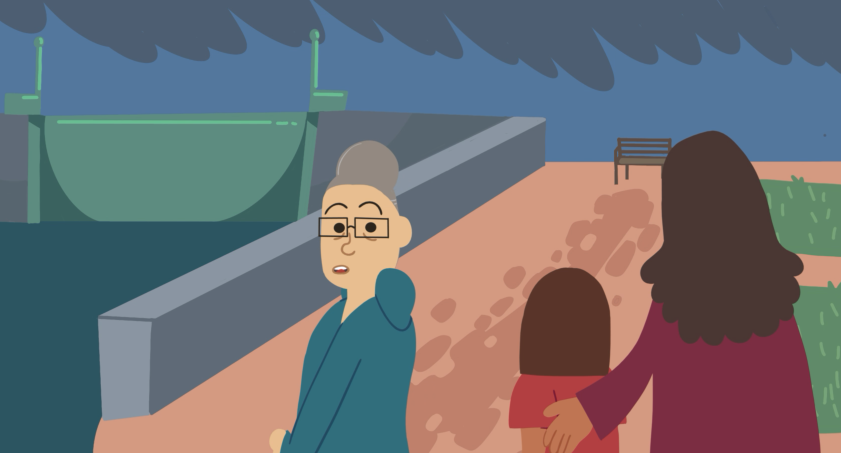
We are delighted to have worked with Seth Jackson Animation and the staff and students at Boston College to produce a new animation, explaining what factors combine to give us storm surges in the UK, their impacts, adaptations and how climate change will affect them. There’s also a knowledge organiser for students to take notes on and summarise their learning. 

Categories
Extreme weather Primary

New Primary Heatwaves Resource

We are delighted to have worked with the Young People’s Trust for the Environment (now Better Planet Education) to develop a four lesson scheme of work looking at heatwaves.

This package of lesson plans consists of 4 lessons:

  • Lesson 1: What are heatwaves?
  • Lesson 2: Why are heatwaves dangerous?
  • Lesson 3: How can schools prepare for a heatwave?
  • Lesson 4: What is your school like during a heatwave and how could it be improved?

By the end, students should be able to show which places in the school are most affected by extreme heat, understand what measures could be put in place to reduce the impact of extreme heat and be able to present their learning and research. 

The lessons have been designed to support learners in Key Stage 2 (or equivalent) with understanding more about heatwaves, the reasons why we are likely to face more of them in the future and some steps that schools can take to protect young people during these events. The lessons can be adapted to suit other age groups by modifying the information given in the linked notes.

Young People's Trust for the Environment
Categories
CPD Extreme weather Weather

5 Weather Websites to Keep an Eye on

Here are 5 (ish) websites which anyone teaching about weather may find useful: 


Earth.nullschool.net for current and past atmospheric and oceanic conditions

Met Office weather warnings

Met Office synoptic charts

Blitzortung for live, global lightning 

NASA for live, global rainfall 

NetWeather for radar images, will it snow and some satellite images

Zoom Earth for satellite images

Categories
Extreme weather Geography Secondary Weather

Storm Eunice and Generic Case Study Template

Storm Eunice cloud and wind

We have created a new worksheet which allows students to collect information and create a case study of a named UK storm. As part of the worksheet, students collect and annotate weather chart and other information about the storm including weather warnings. 

Storm Eunice is given as a worked example. 

Categories
Blog Climate Climate Change Extreme weather

A Three Dimensional Model of the UK’s Weather and Climate

3D model


The Central England Temperature (CET) dataset is the longest instrumental record of temperature in the world, pre-dating the satellites and radar instruments which we now have to tell us about the state of the atmosphere.

The data represents the temperature in a roughly triangular area of the United Kingdom enclosed by Lancashire, London and Bristol.

The sources of the data include records kept by individuals around the country, all carefully combined and corrected for factors such as changing instruments over time etc. The precision of the data published for each year reflects the number, accuracy, reliability and geographical spread of the temperature records that were available for that year – so early in the record, the data may only have a precision of 1°C or 0.5°C, whereas more recent data has a precision of 0.1°C.

The mean monthly temperature record starts in 1659 (with daily data being available from 1772 and maximum and minimum daily and monthly data beginning in 1878).

The full dataset and references can be found at www.metoffice.gov.uk/hadobs/hadcet

The Royal Meteorological Society is delighted to have collaborated with CREATE Education to develop instructions to allow schools or individuals to 3D print sections of the Central England Temperature Record and use their models to learn about weather, climate, extreme weather and climate change.

These engaging, tactile resources allow students to get a hands-on experience of what climate is and how it can change, and how extreme weather relates to the climate.

Each three dimensional block shows 10 years’ worth of monthly temperature records. Printing off several blocks allows you to compare the changing weather and identify extreme weather events. The models have been designed to interlink, so students can create a series of models to represent larger timeframes.

Climate is usually defined as the average of 30 years’ weather. For easy comparison with the weather in any one year, you can 3D print an additional mini block which shows current (1981-2010) climate.

Once the 3D models have been created and 3D printed, there is a tactile resource that can be used in multiple ways in the classroom to visualise and study past weather and climate, and at how the climate of the UK has been changing over time.

The lesson resources specifically focus on

1. The difference between climate and weather

2. The current climate of the UK

3. The changing climate of the UK

4. Looking at past extreme weather events and researching their impacts on people in the UK.

MetLink - Royal Meteorological Society
We use cookies on this site to enhance your user experienceBy clicking any link on this page you are giving your consent for us to set cookies. More info

By clicking any link on this page you are giving your consent for us to set cookies. More info